Home Page > > Recipes > Comfort Food > Simple Salted Caramels Recipe with Video

Simple Salted Caramels Recipe with Video

by on December 8, 2012 · 73 comments

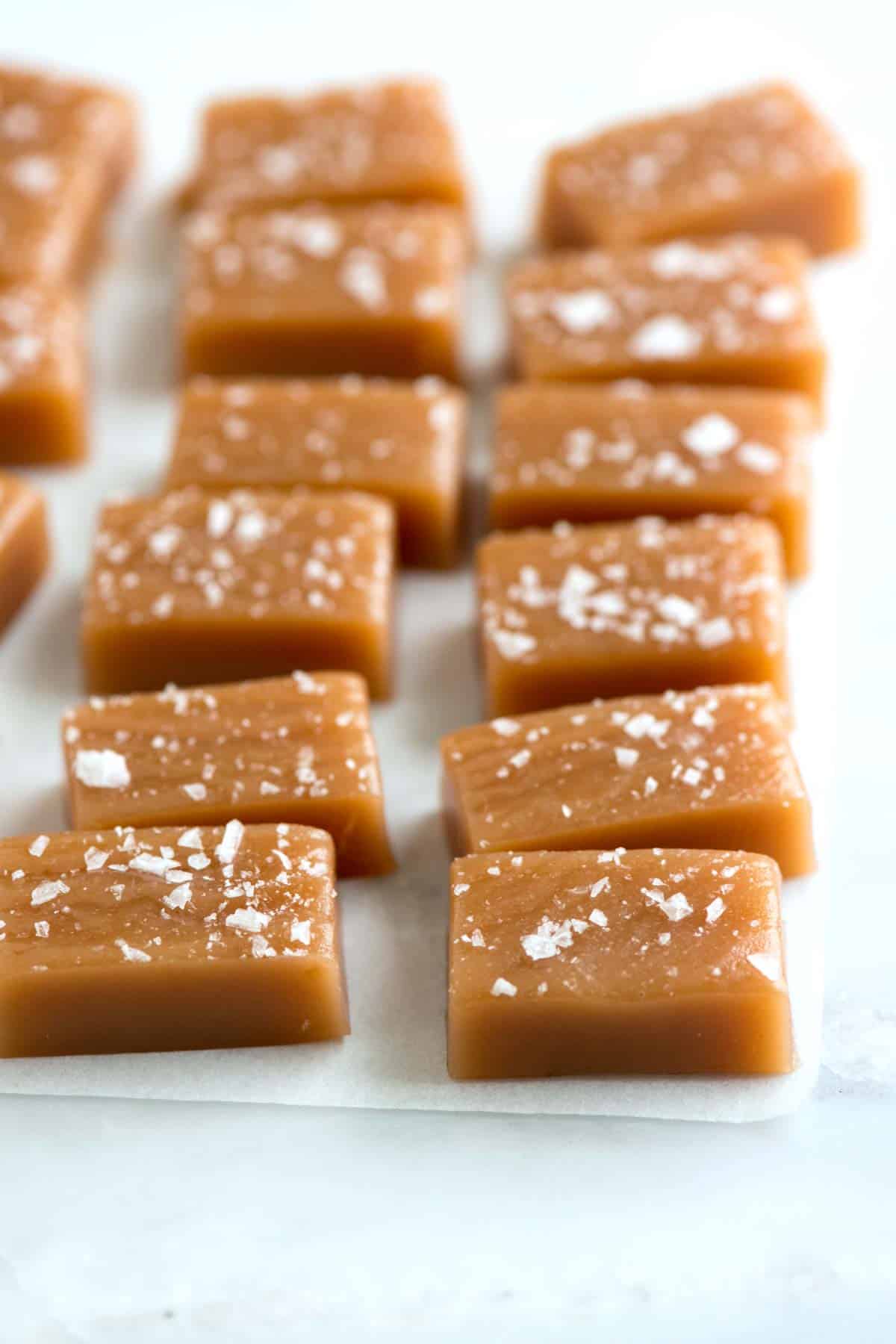
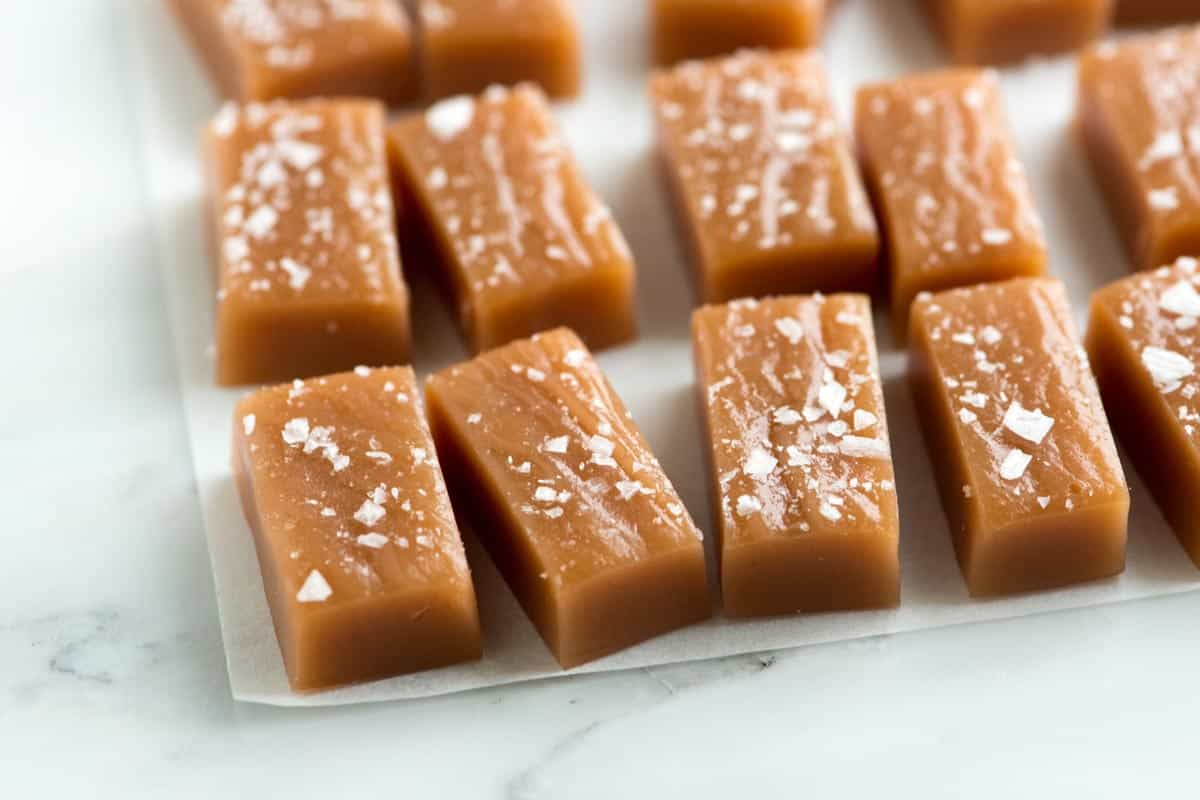
These salted caramels are soft, chewy and perfectly melt away in your mouth. Our salted caramels recipe is easy-to-follow and has step-by-step photographs to make this extra easy. We’ve also shared lessons we’ve learned from making our own caramels at home.

Making Our Salted Caramels Recipe – Lessons We’ve Learned From Our Own Mistakes

One thing we love about cooking is that no matter the recipe or technique, with practice and a little sense, it can become easy. When we first began to make caramels, we admit, things did not always work out. In fact, some time ago, we published a salted caramel recipe on this very blog. It worked for us, but not for others. So, we went back to the drawing boards and did our best to learn more. That’s how we can confidently share the following lessons as well as this new (and improved) salted caramels recipe.
Simple Salted Caramels Recipe

Be Ready.

Before you begin making salted caramels make sure you you’ve read through the recipe a couple times and have all equipment ready and ingredients measured out. Candy making can go by quickly and if you’re not ready, things can go from good to bad fast.

Crystallization is Bad.

When making caramels, it is important to do everything you can to prevent crystallization, which can make your caramels grainy and ruin the texture.

Making Our Salted Caramels RecipeFor our recipe, when you’re adding the sugar to the pan, add it slowly and with control. It’s best not to allow the sugar to splash up the sides of the pan as this can cause crystallization. With that said, even when we make our caramels, we will sometimes see a few rogue sugar crystals on the sides of our pan.

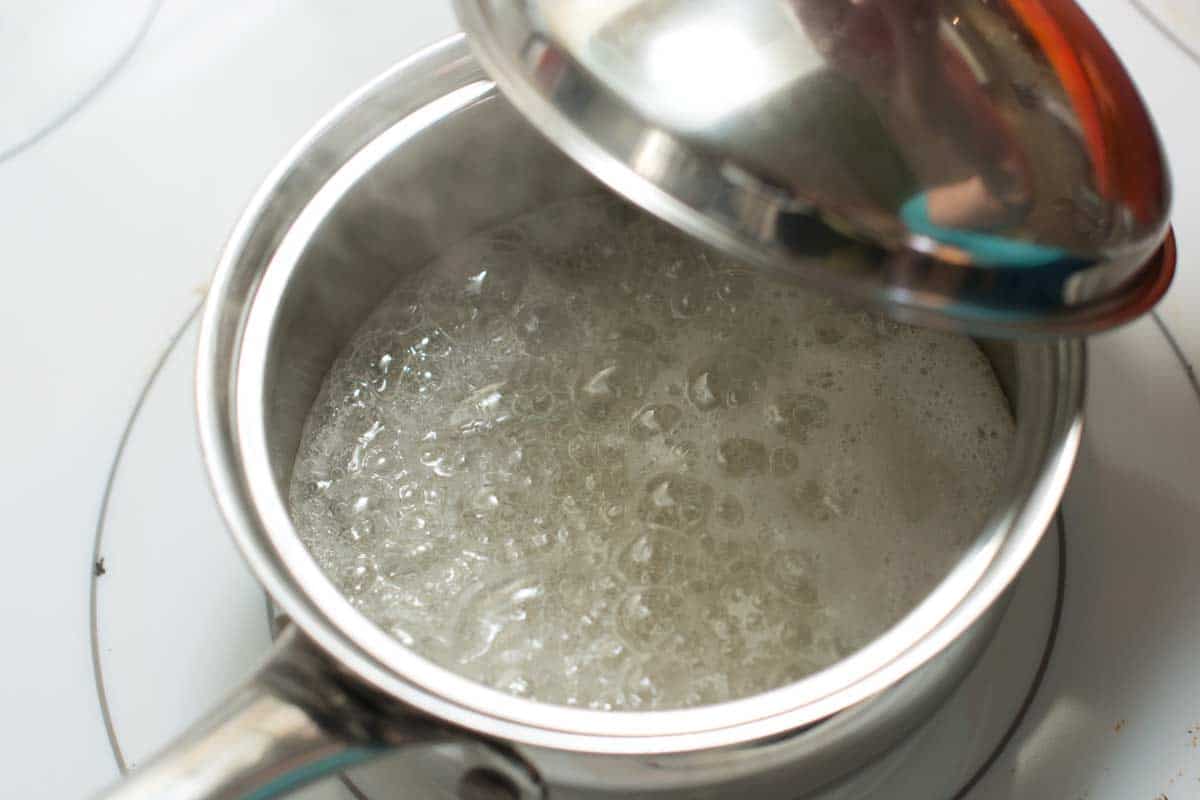
For this reason, we include a little fail-safe in our recipe. Once you have brought the water, corn syrup and sugar to a boil, we ask that you cover the pan and leave it be for one minute. This traps steam and moisture in the pan and helps melt any sugar crystals that may have found their way up the sides of the pan.

Try not to stir sugar as it cooks. In our recipe, we ask that you stir to moisten sugar before bringing it to a boil. This is fine, but after that, there is no need to stir until you begin to add the butter and cream – even then, though, we only ask that you use the bottom of the candy thermometer to stir, not a spoon.

Use Heavy Cream.

In our recipe, we call for “heavy cream” or “heavy whipping cream.” If you check the back nutrition panel of cream cartons, you will notice that the percentage of butterfat can vary. For our caramels recipe we need cream that contains at least 36% butterfat. So, use either “heavy cream” or “heavy whipping cream” since they contain 36% or more. Do not use “whipping cream,” since that is only made up of 30%.

The Thermometer.

Candy ThermometerDon’t try this without a candy thermometer. The temperatures matter.

For our recipe, there are two temperatures to look out for:

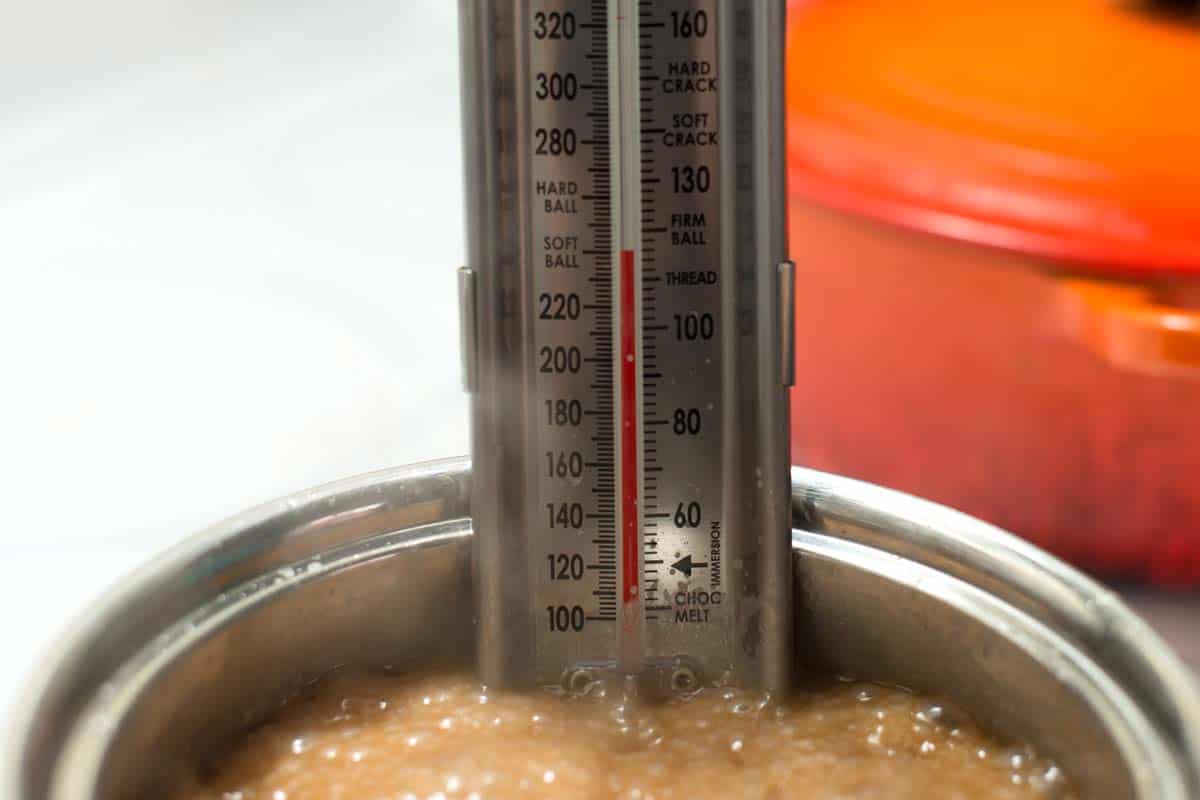
First, we ask that you cook sugar, corn syrup and water until it reaches 320 degrees F (160 degrees C). According to the stages of candy making, this is past what is called the “hard-crack stage,” which means there is virtually no water left in the sugar syrup and if you were to drop a little of the molten sugar into cold water, it would become brittle and most likely crack when bent. The “hard crack stage” is when the sugar syrup is between 300 and 310 degrees F (149 and 154 degrees C). Since we are passing this stage, the sugar syrup will start to “caramelize” and you will actually notice that the syrup will begin to take on an amber color. It is important not to pass 320 degrees F (160 degrees C).

Second, after reaching 320 degrees F (160 degrees C), we ask that you add a butter and cream mixture to the sugar syrup. Then, you will cook that until 240 degrees F (115 degrees C). At this temperature the once the caramels have cooled completely, they will be soft and chewy. If you wanted a slightly harder caramel, you could bring the temperature closer to 245 degrees F (118 degrees C).

Salted Caramels Recipe Step

One more note about temperature and candy thermometers. Most candy thermometers will show an “immersion” line. From our experience, the majority of candy recipes will never be large enough of a batch to actually reach the immersion line. With that said, we have found success as long as the tip of the thermometer is fully immersed. Also, most candy thermometers have a guard to prevent the thermometer from touching the bottom of the pan, if yours does not have this guard, make sure the tip of the thermometer never touches the bottom of the pan as this will affect how accurate the thermometer reading will be.

Stick to the Recipe.

Don’t double or triple caramel recipes. Timing is essential when making caramel and doubling a recipe can affect cooking time, something that could affect your end results.

The Weather.

We know this seems a little odd, but weather can affect the your success when making candy. Cooking sugar to a certain temperature is all about achieving a specific ratio of sugar to moisture. So, if you can, make caramel on a cool dry day. If the air is humid, the caramel can actually reabsorb some moisture, which might negatively affect the texture and softness of your caramel.

Salted Caramesl Recipe

The Cleanup.

Salted Caramels RecipeCleaning the pot and candy thermometer after making caramels can be a little sticky. From our experience, we’ve found that if you add water to the pan then bring it to a boil, the caramel stuck to the sides of the pan will melt away.
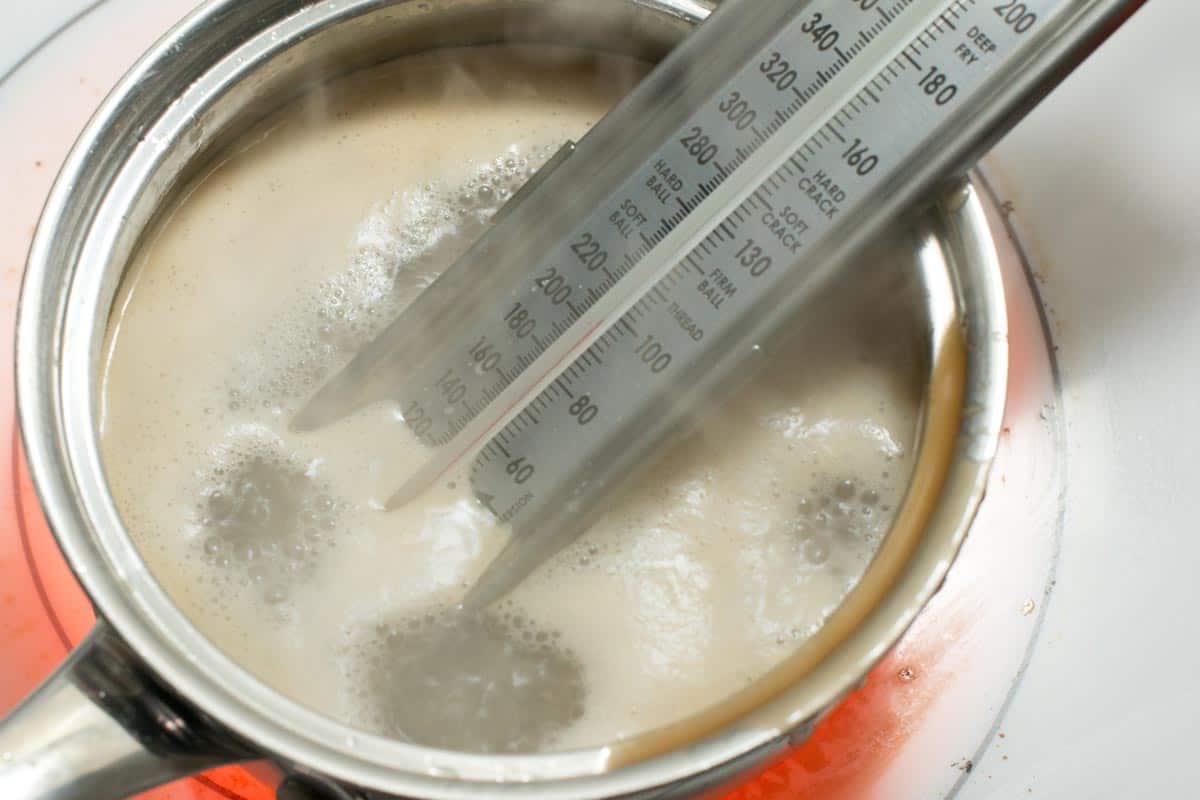
You can also add the candy thermometer to the boiling water to remove sticky caramel from the bottom of it, too.

Simple Salted Caramels RecipeDid you like our Simple Salted Caramels Recipe? If so, we’re sure you’ll love these:

4.9 from 9 reviews

Simple Salted Caramels Recipe
 
Prep time

Cook time

Total time


These salted caramels are soft, chewy and perfectly melt away in your mouth.

Before starting to make our salted caramels recipe it is best to be sure you have all equipment ready and ingredients measured out. This caramels recipe has been inspired and adapted from Jacques Pépin’s book, “Chez Jacques: Traditions and Rituals of a Cook.”

Created By:
Yield: 35-40

Ingredients
  • 1/2 cup (113 grams) unsalted butter (1 stick)
  • 1/2 cup (120 ml) heavy cream or heavy whipping cream (36-40% butterfat content)
  • 3 tablespoons water
  • 1/4 cup (60 ml) light corn syrup
  • 1 cup (200 grams) sugar
  • 1/2 teaspoon course or flaked sea salt

Method
  1. Lightly oil a 9 x 5 inch loaf pan then measure and cut a piece of parchment paper that will fit inside the pan and come up the sides by at least 1 inch. Next, lightly oil the parchment paper and place into the pan. Set the pan aside.Salted Caramels Recipe Step 1
  2. Cut butter into 8 pieces then combine with heavy cream in a small microwave-safe bowl. Heat in the microwave for 1 to 2 minutes until hot and butter has melted. Set aside, we will use this later.Salted Caramels Recipe Step 2
  3. In a small saucepan combine the water and corn syrup. Then, add the sugar, but try your best not to splatter the sugar up the sides of the pan. Now, use a spoon to gently stir the sugar into the water and corn syrup, just moistening the sugar.
  4. Heat over medium heat until the sugar has come to a boil. Then, cover with a lid for 1 minute. This adds steam/moisture to the pan, so any sugar that may have stuck to the sides of the pan melts and falls back into the boiling sugar.
  5. Remove lid then attach a candy thermometer to the side of the saucepan. Then, cook sugar for 5 to 10 minutes, until the sugar reaches a temperature of 320 degrees F (160 degrees C). At this temperature, the sugar will take on a light amber color around the edges of the pan.Salted Caramels Recipe Step 3
  6. The moment the sugar reaches 320 degrees F (160 degrees C), carefully pour about a sixth of the butter and cream mixture then stir, using the base of the candy thermometer to incorporate it. Repeat with the remaining cream and butter (adding a sixth of it at a time then stirring). The sugar will bubble violently as you add the butter and cream – so do this carefully and slowly to prevent the mixture from bubbling over the sides of the saucepan.
  7. By adding the cream and butter, the temperature will drop. Now, continue cooking for another 5 to 10 minutes, until the caramel reaches a temperature of 240 degrees F (115 degrees C). This will create a soft caramel, if you want slightly harder caramels, bring the temperature closer to 245 degrees F (118 degrees C).Salted Caramels Recipe Step 4
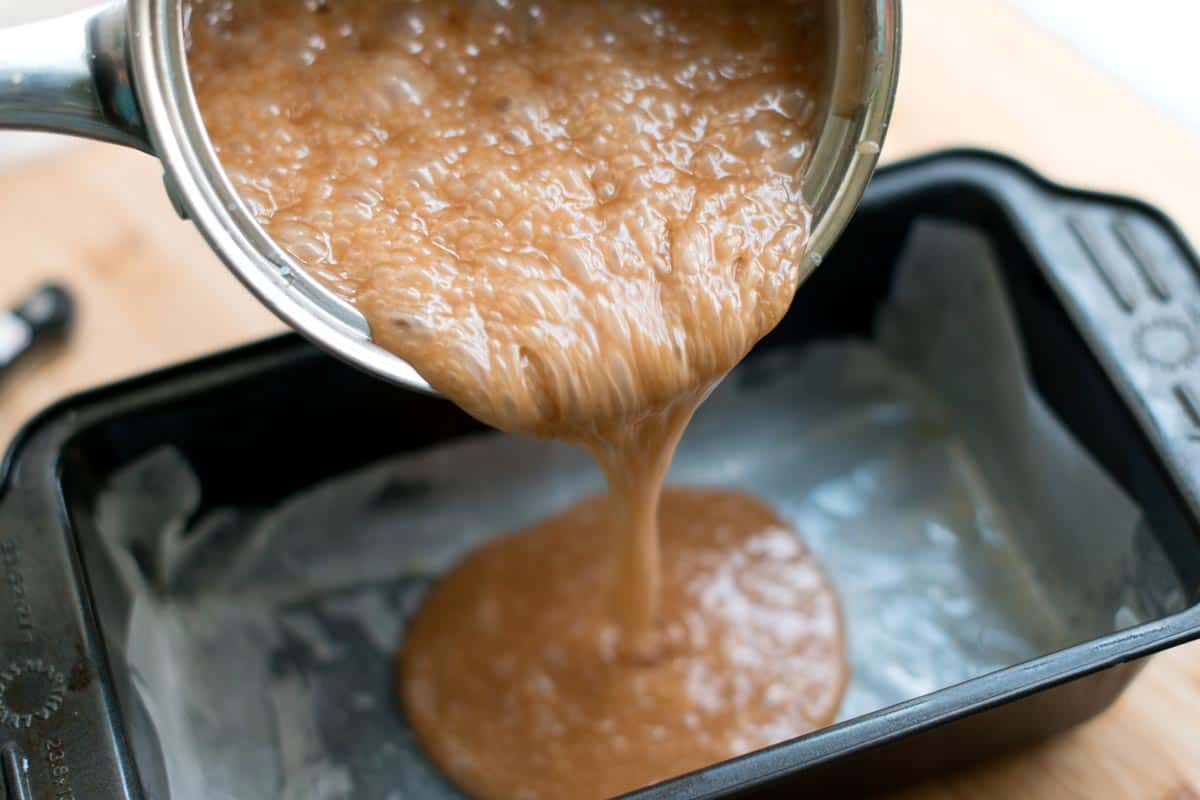
  8. The moment the caramel reaches your desired temperature, pour into the prepared loaf pan. Cool 20 to 30 minutes then scatter the salt over the caramel. Then, let the caramel cool 3 1/2 hours.
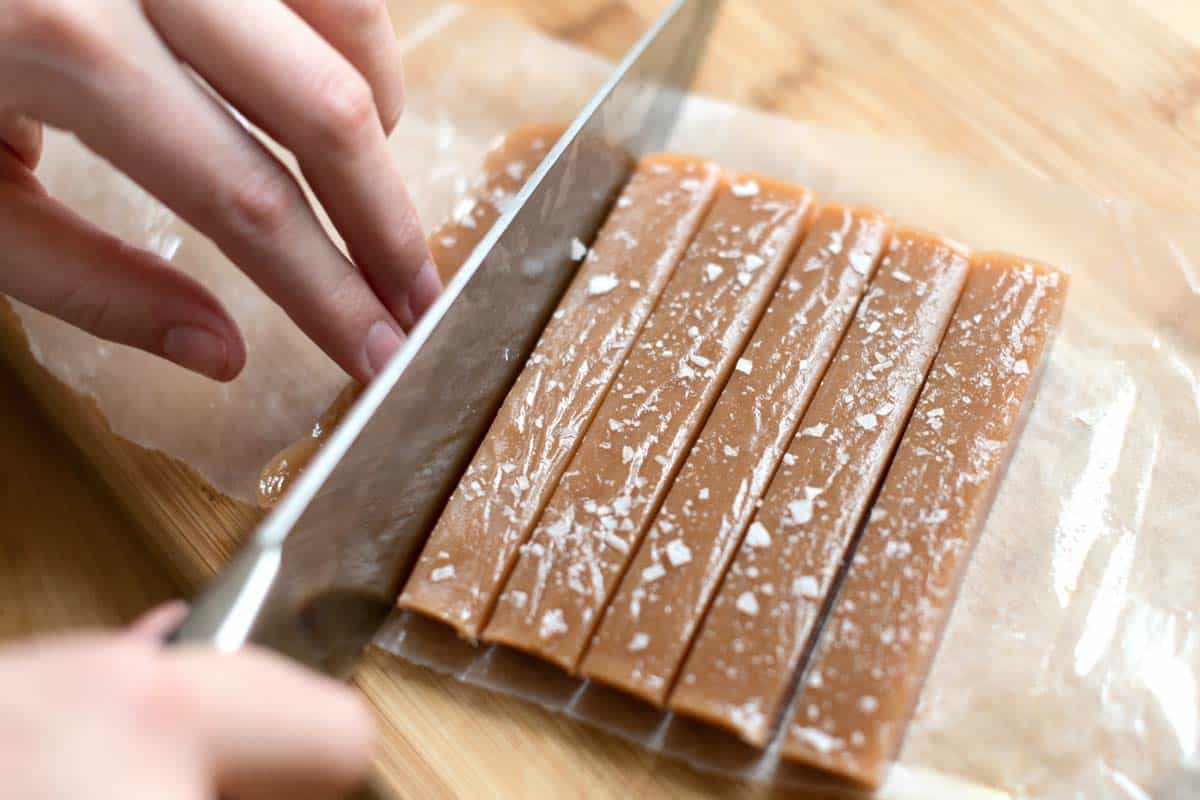
  9. Unmold the caramel. If the caramel is too soft to work with, place into the refrigerator 30 to 45 minutes to firm up. Then, use a large sharp knife to cut into your desired shape. We like to cut into 1-inch by 1/2-inch rectangles.Salted Caramels Recipe Step 5
  10. Wrap caramels in plastic wrap or waxed paper and enjoy immediately, or you can refrigerate or freeze for enjoying later.

Notes
Special Equipment: Small (1 quart) saucepan with lid (the heavier, the better) and a candy thermometer (we use a Taylor Candy and Deep Fry Thermometer)

Don’t forget to watch our salted caramel recipe video.

Print This Recipe Save This Recipe Comment / Review

About the Author

Joanne

I'm Joanne Gallagher and alongside my husband, Adam, I develop, test and share favorite recipes from our kitchen. I'm completely in love with food and you'll most likely find me covered in flour, chocolate or both.

Still Hungry? Sign up for Our Free Weekly Newsletter

Enter your email address to join others to receive hand-picked recipes, giveaways and inspiration in your inbox:

Follow us on Facebook or Google Plus for Daily Inspiration

73 Comments

1 Anna December 5, 2011 at 2:27 am

I love butter in almost anything and everything…I am intrigued at how flavorful this will be after adding salt in the candy mixture. Wanna try this myself. How nice of you to share a sweet treat!

Reply

2 the wicked noodle December 5, 2011 at 8:59 am

Gorgeous as always! Would make such a great Christmas gift.

Reply

3 Rachel @ Bakerita December 5, 2011 at 5:36 pm

Wow, these look super delicious.
Can’t wait to try this recipe…my last attempt at caramels turned out a little too hard for my liking, despite following the recipe exactly.

Reply

4 Joanne December 5, 2011 at 6:37 pm

Rachel – These are still on the harder side. Once you have them in your mouth, they soften up, but just so you know, they aren’t “soft.” Nevertheless, they are delicious! Let us know what you think :)
-Joanne

Reply

5 Jennifer (Delicieux) December 6, 2011 at 2:15 am

Yum!!! Can you send me a batch, pretty please!!! I love salted caramel!!! In fact, love is not strong enough to denote how I feel about salted caramel!!

I love your step by step instructions too. So helpful when dealing with things like caramel.

Reply

6 Shil December 7, 2011 at 9:26 pm

That looks amazing.

Reply

7 JavelinWarrior December 9, 2011 at 9:32 am

This post is absolutely fetish-worthy and I’ve been inspired to include it in my Friday Food Fetish blog. If you have any objections, please let me know

Reply

8 beti December 9, 2011 at 11:18 pm

I love making caramels, they are so easy and delicious!

Reply

9 Jirish February 4, 2012 at 7:02 pm

These look great and I really want to make them. Here’s my hesitation: I have half-and-half and no heavy cream. Will it work? Thanks in advance.

Reply

10 Joanne December 8, 2012 at 1:41 pm

Hi Jirish, We have never tried using half and half, however, we recommend using heavy cream for the best results.

Reply

11 Paul June 17, 2013 at 2:46 pm

Half-and-half will make an acceptable product — just not this one.

Because half-and-half is half milk (by definition), it contains substantially more water and protein than does heavy cream. Thus, the fat content will be lower and the protein content will be higher.

The increased protein will result in a tougher end product that will not dissolve as quickly in your mouth and will required more chewing.

The excess water will boil out and will just increase the cooking time.

Reply

12 Matt December 5, 2012 at 5:21 pm

Hi, Joanne.

I’ve just started making caramels based on a recipe I saw in the New York Times. Their recipe says heat to 245, and produced really soft caramels that were a bit too soft for my liking. Yours says to heat to 260 and will produce harder caramels.

It seems like that implies that there’s a direct relationship between the target temperature and the resulting candy’s softness/hardness. Would you say that that’s correct?

Reply

13 Paul June 17, 2013 at 2:51 pm

Yes.

Temperature and moisture content are directly related. The temperature increases as the water content decreases. Further, softness and water content are also directly related. As water content decreases, the end product becomes harder.

Thus, as temperature increases, water content decreases, and hardness increases.

Reply

14 Paul June 17, 2013 at 3:07 pm

Essentially any candy recipe can be used to make multiple products.

Stop cooking at a lower temperature and you’ll get a caramel syrup.

Stop cooking at the suggested temperature and make caramels.

Cook it a little longer and make taffy — although the high protein content will make it difficult to pull and a lot of the fat will separate out during the pulling process.

Cook it even longer to make a hard candy.

Reply

15 Chris Dowsican December 8, 2012 at 2:47 pm

I make my own Salted Peanut Brittle from my Grandmother recipe and can’t wait to try these. I have found that if i put a glass or measuring cup of HOT water nexto to my cooking area and put my thermometer straight in it when i’m done with the first batch then when i’m ready to do the second batch my thermometer is clean and ready to go.

Reply

16 Joanne December 8, 2012 at 4:38 pm

Great tip!

Reply

17 Karley December 10, 2012 at 6:35 pm

My carmels are turning out very light in color. I’m going to right at 320, is there something I am doing wrong?

Reply

18 Joanne December 11, 2012 at 8:39 am

When making these caramels, you will need to bring the mixture to two separate temperatures – First, bring to 320 degrees F. At 320 the sugar syrup should be almost clear with a light amber ring around the edge. Once you add the cream and butter you will then cook the caramel until 260 degrees F (another 5 – 10 minutes). This is when you will start to see the golden caramel color appear. When they are done, the caramels are a light golden brown and soft.

Reply

19 JulieD December 13, 2012 at 10:04 pm

Great video!! I need to try these! :)

Reply

20 Ally December 13, 2012 at 11:19 pm

Since I have a couple diabetic family members, would substituting sugar with blue agave sweetner work?

Reply

21 Adam December 17, 2012 at 12:33 pm

Hi Ally,
We would love to be able to let you know of a substitution that would be more diabetic friendly but we have limited information on the subject. If you find a substitution that works please let us know.

Reply

22 amyq December 20, 2012 at 4:29 pm

Hi,
I have followed your recipe and have a question. After raising the sugar mixture to 320 degrees and then adding the cream/butter. You recommend cooking until the temperature is at 240 or 245 degrees. however, my thermometer says the candy mixture is currently at 350 degrees. How do I cook this mixture to a lower temperature? Is the cream/butter mixture suppose to lower the temp below 240 in order for one to cook up to that temp?

thanks for you help

Reply

23 Joanne December 20, 2012 at 4:46 pm

Hi there, Yes, as you add the cream and butter mixture the sugar temperature will drop below 240 degrees F. Then, it should take 5 to 10 minutes to get the temperature to 240 degrees.

Reply

24 Mugsy January 24, 2013 at 2:07 am

This is exactly what happened to me. I had to take the pan off of the flame to get the temp to drop to 240. The caramels were lovely but a bit too soft, probably because the mixture didn’t cook long enough to ”
reach 240″. Will try again!

Reply

25 Amanda Marie December 21, 2012 at 6:28 am

Thanks so much for going into such detail. I made these tonight and they are just what I wanted. Awesome!

Reply

26 Katharine Sherwood December 21, 2012 at 4:14 pm

Thank you for the step by step. My first batch was a little to soft but the second was perfect. First time with candy and I’m pretty proud of myself.

Reply

27 Laurie December 22, 2012 at 1:47 pm

I just made this and it is setting. I timed it wrong in that I need to go out at about the 3 hour mark. Should I cut it before going out or will it be ok later tonight or tomorrow. Wasn’t sure if it was a set 3,5 ours or at least.

Thanks. Looks get and thanks for the step by step instruction.

Reply

28 Adam December 22, 2012 at 3:22 pm

Hi Laurie, You can probably cut after 2 1/2 hours — just check to see if the caramels are too soft. If they are, place them into the fridge for 10 to 20 minutes then cut.

Reply

29 Jane Templeton December 22, 2012 at 8:25 pm

I have made many carmel reciepes and was looking for a small batch this year. I tried this one and it is wonderful. The tips are very helpful and I was finished in about 45 minutes. The result was one of the finest carmels I have ever made, I got compliments and requests for the rec. from everyone who tried it. Turns out I needed a bigger batch but I will keep this one and make it for many years. Thanks so much! Jane

Reply

30 Joanne December 27, 2012 at 1:07 pm

So happy they worked for you! :)

Reply

31 Heather December 23, 2012 at 9:50 am

Great recipe! Easy and delicious! I gave caramels to friends as gifts for Christmas and everyone raved about them.
Thank you!!!

Reply

32 Joanne December 27, 2012 at 1:07 pm

So happy you loved them :) They are our favorite!

Reply

33 Laurie December 23, 2012 at 1:56 pm

I made these yesterday. I had never made caramel before and thanks to your detailed instructions, they came out perfectly. I’m bringing them to my boyfriend’s family along with some fudge and toffe.

Thank you. I think I’m going to make a second batch to have on hand.

Reply

34 Shara December 23, 2012 at 2:59 pm

These are the best ever! Recipe and instructions – amazingly easy to follow and bang on!

I would like to add a litle vanila – how much and when would I add it? Thanks so much.

Reply

35 Joanne December 27, 2012 at 1:06 pm

Hi there! Add a teaspoon of vanilla extract to the melted butter and warm cream then follow the recipe as stated.

Reply

36 alice eller December 31, 2012 at 4:42 pm

Your video was great, very imformative. I’m going to try this recipe. thanks very much !

Reply

37 Leah January 1, 2013 at 5:01 pm

Thank you for the recipe and the video. I tried to make caramels this weekend (using another recipe) and I think I burned the sugar solution because it turned dark and the temperature shot up to ~360 once I added the cream and butter, then dropped down to ~220 within a few seconds. The consistency of the caramels was lovely but the taste was awful – entirely bitter. I had to throw them out. I’m going to try again right now with your recipe. I am using unsalted butter and I’m wondering if I should add salt to the liquid at some point to compensate (assuming your recipe calls for salted butter). Also, what kind of oil do you use on the pan? Is it olive oil? Do you think that affects the taste? Thank you!

Reply

38 Adam January 7, 2013 at 5:13 pm

Yes, we used olive oil. We really have not noticed any flavor from it, however, you could certainly use something like a vegetable or canola oil that has no flavor.

For the butter, we used unsalted butter. We have amended the recipe to make that more clear. Thanks!

Reply

39 Terri January 3, 2013 at 1:06 am

Hello I wanted to know if I can double triple or quadruple this recipe and get same results? Thank you,

A caramel fanatic :)

Reply

40 Joanne January 4, 2013 at 10:01 am

Hi Terri, We have not tried this– we like the smaller batch since it fits a small saucepan well. If you do try tripling the recipe, timing will be very different, but the temperatures you are required to reach will be the same. Also, be careful with the saucepan you choose. Remember that when you add the cream and butter the caramel will bubble violently and if the pan is too small, you risk the caramel overflowing. So the pan needs to be large enough to accommodate. With that said, it also needs to accommodate the candy thermometer.

Reply

41 Laura January 25, 2013 at 5:00 pm

Superb. Sublime. Divine. Take your pick or all three, because these caramels are worth it.

I made these once a few weeks ago and loved them. Today I tried another recipe from someone else and there is no comparison between this recipe and the other one. The caramels here are truly wonderful.

Thank you for the beautiful and well-written recipe and video.

Reply

42 Melissa Farley January 27, 2013 at 11:43 pm

AWESOME recipe! Perfect consistency…we were very happy! We had to use waxed paper to line the pan because we ran out of parchment (oops) but were still able to get the caramel off fairly easily.

One question…we did have a mildly burned taste even though we were absolutely accurate with our temperature readings, and we are wondering if this could be due to the high altitude here (4000ft). We were considering trying to lower the temperature after adding the cream and butter to 235 instead if 240 when pulling it off the stove. What do you think?

Reply

43 Therese Given February 14, 2013 at 4:58 pm

I “googled” salted caramels recipe and found your recipe… so glad I did! You did such a thorough job of explaining everything. I already have a tried & true recipe I use but your video helped me with avoiding crystallization and the other important factors in the caramel making process. Pinning this so I can refer back. Thanks!

Reply

44 Muppet February 17, 2013 at 11:23 pm

This recipe is very good. It took a lot longer to get the sugar to 320 degrees and then took forever for it to get to 245 degrees after adding the butter mixture. I think it took me over about an hour to complete. I let them sit in the pan for 4 hours before cutting them and they were still a little soft. I’ll have to cook it a little higher than 245 degrees next time to get them a little harder.

Reply

45 Louisa February 19, 2013 at 10:01 pm

Very tasty. My stomach is upset from eating too much. Surprisingly easy to make. Candy making scares most people, I think, but this recipe was very easy to fallow. I love how simple caramel is. You just have to be careful and prepared ahead of time. Thank you for the tasty recipe.

Reply

46 Stephanie February 21, 2013 at 8:17 am

Thank you for providing such a detailed and informative recipe! Your video is great. I followed your instructions exactly, including setting my stove temperature dial to the exact same position that you set it to in the video. In doing this, I found that I reached my temperatures at the same times you state they should be reached.

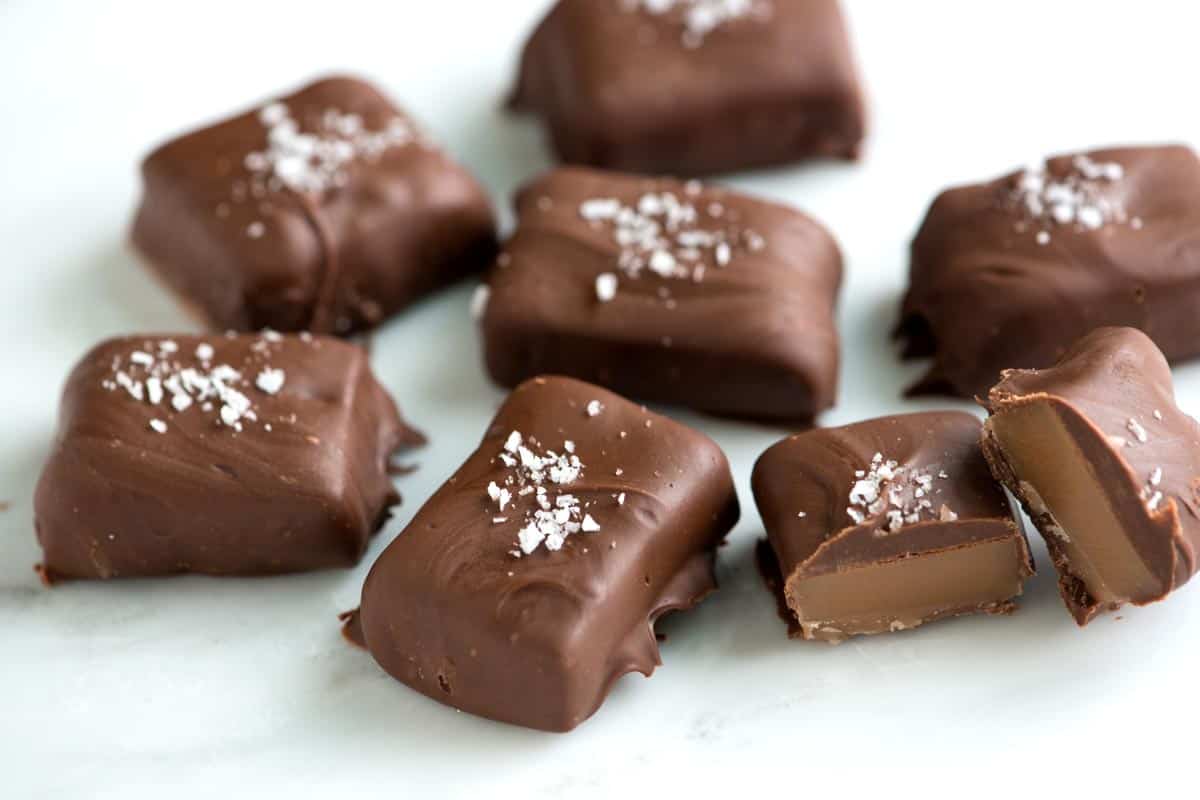
The caramels were incredible. I put a little salt in my pan to start, with the water and sugar and corn syrup, and I skipped the salt on top of the caramel at the end. After the setting time, I cut them into squares, popped them in the freezer for 10 minutes, and then dipped/covered them in dark chocolate. Then I sprinkled just a touch of fancy pants salt on top of each one after the chocolate had barely set. The end result was pretty impressive. They looked like a $50 box of chocolate caramels, and tasted even better because they were so fresh! Even using organic ingredients, these cost under $5 to make, including the chocolate. What a fantastic gift idea! Thank you!

Reply

47 rushgirl2112 February 22, 2013 at 2:00 pm

Thank you so much for posting this wonderful recipe! I’m a beginner at candymaking, and this was super easy for me.

I’ve made several batches now, and the only problem I’ve had is with temperature in the first stage. My first batch of sugar syrup was burned by 310. I’ve tested my thermometer at boiling temps (spot on at 212), so I’m not sure if it’s an inaccuracy problem with my thermometer at higher temps or not, especially because the temps in the second stage are just right. 240 makes a soft caramel, 245 a little harder.

Anyway, since then I watch the sugar syrup carefully and add the cream/butter when the syrup is a medium, golden amber color. This happens on my candy thermomter at around 295-300. Every batch I’ve made this way has turned out perfectly.

Oh, and I also tried adding vanilla as suggested, and the results are simply heavenly. An absolute keeper recipe, and I’m still astounded at how very easy it is to do. Thank you!!

Reply

48 diana March 17, 2013 at 12:33 pm

Thanks for the recipe, can you change corn syrup for something else?

Reply

49 WWMC March 18, 2013 at 6:21 pm

I just made this recipe and it’s cooling on my counter! It looks amazing already, I can’t wait to try it! Thanks Joanne!

Reply

50 Adam March 18, 2013 at 6:52 pm

Waiting is the hard part :) You will have to let us know how they turned out.

Reply

51 Carole March 18, 2013 at 8:19 pm

It is a good recipe but my attempt turned out very hard and I couldn’t cut it. What did I do wrong?

Reply

52 Joanne March 19, 2013 at 10:37 am

Hi Carole — It is possible the temperature of the caramel was too high while cooking the sugar syrup with the cream and butter. The temperatures we stated in the recipe should make for a soft caramel — Maybe your candy thermometer is uncalibrated?

Reply

53 Monica April 2, 2013 at 3:21 pm

Hi Joanne — This recipe sounds wonderful. I have a question regarding butter — do you have experience working with different brands of butter and if so, have you noticed any issues (especially regarding moisture content)? The reason I ask is that I’m going to attempt to make lactose-free caramels if possible — and this will probably require that I make my own butter. (I buy lactase enzyme drops and add them to cream with good results; am hoping I can use that cream to make butter.) However, I’ve never made butter before and remember reading that it’s important to remove the whey when making it — and I’m worried I won’t remove enough or the moisture content of the homemade butter might be higher than that of commercial butter. Do you think this might pose a problem when making caramels? Thanks.

Reply

54 Joanne April 3, 2013 at 5:53 pm

Hi Monica — We aren’t 100% sure — Though we think you should be okay. If you’re up to it, you should experiment. We’re more concerned with fat content than moisture content for the caramels — in fact, quite a bit of the moisture is cooked out.

Reply

55 Paul June 17, 2013 at 2:34 pm

Because the temperature of the candy is highly dependent upon the moisture content, any extra moisture would be boiled out in the effort to attain the proper temperature — it would just take longer.

Commercial butter is 20% whey. If you’re really concerned about the moisture content of your homemade butter, then do this. Make the butter and reserve the whey. Then melt the butter. The melted butterfat will separate from the incorporated whey and float on top. Add or remove whey and/or butterfat until you get the correct volume and correct percentages 80/20.

Reply

56 Sandra April 16, 2013 at 4:13 am

Hi,
I was wondering if I sprinkle fleur de sel on the caramels before wrapping in cellophane twisting wrap, will the salt get absorbed and make the caramels turn grainy from the slight moisture in the salt. I find that Le Saunier De Camargue Fleur De Sel which is what I usually use to finish with is slightly moist whereas Maldon flakes seem to be drier and maybe I should use that product. I know that cellophane twist wrap keeps the caramels pretty airtight and don’t want the caramels to absorb the salt and get grainy/wet. Have you tried finishing salt on top and then wrapping in cellophane and how long can you keep them with a smooth silky texture? I need to make several hundred for a wedding and would like to make a couple weeks ahead.
Thank you!

Reply

57 Joanne April 16, 2013 at 12:30 pm

Hi Sandra — These caramels never last long in our home. The longer the caramels sit, the higher possibility of them turning grainy. We suggest keeping the caramels wrapped in the fridge until you are ready to give them out and wouldn’t make them more than 10 days in advance.

Reply

58 Isabella M April 20, 2013 at 11:02 pm

So I did this all the right ingridients, but when i was heating the sugar syrup and water it burned way before it was at 320 why did this happen????

Reply

59 Joanne April 22, 2013 at 12:48 pm

Hi Isabella, It’s hard to say, but pan size and the stove top temperature could be to blame. You want to use a small pan and keep the temperature around medium heat (even lower if you think your stove overcompensates with heat).

Reply

60 Paul June 17, 2013 at 2:24 pm

This is one of a few online recipes for caramel that really is caramel — caramelized sugar. Most of the recipes I’ve found online are actually Dulce de Leche, in which the protein in milk has been browned, not the sugar. Sugar begins caramelizing above 310 F, whereas the protein in milk begins browning at temperatures below 290 F. The recipes using Dulce de Leche in place of caramelized sugar never get hot enough to caramelize the sugar. Of course, Dulce de Leche is REALLY good — but I was looking for a recipe in which the sugar was caramelized. Thank you.

Reply

Leave a Comment or Review

Did you make it? How was it?:  

Previous post:

Next post: